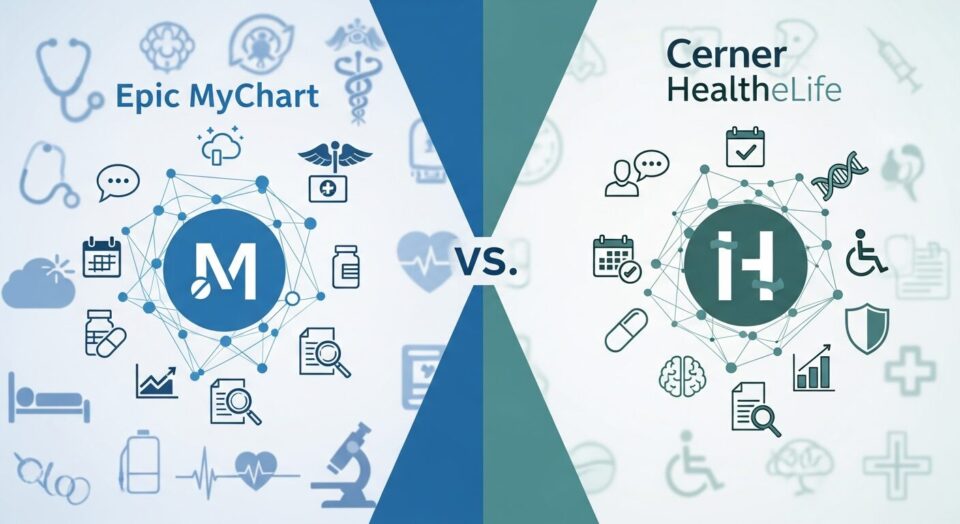
Choosing between Epic MyChart and Cerner HealtheLife involves far more than comparing features—implementation costs range from $25 monthly to $800K, but there’s a critical factor most healthcare administrators overlook that determines long-term success.
Key Takeaways
- Epic MyChart dominates the U.S. patient portal market with superior user experience and wide-ranging features, while Cerner HealtheLife offers competitive functionality at potentially lower costs
- Implementation costs vary dramatically between the two platforms, with Epic ranging from $400K-$800K for mid-size practices compared to Cerner’s flexible pricing starting at $25 monthly
- Epic’s unified EHR ecosystem provides seamless integration advantages, while Cerner offers greater third-party integration flexibility through its more open architecture
- Patient satisfaction data consistently shows Epic MyChart receiving industry awards and higher user ratings, though real-world implementation success depends heavily on organizational strategy and resources
- The choice between these platforms should align with organization size, budget constraints, and long-term integration strategy rather than features alone
Healthcare administrators face a pivotal decision when selecting patient portal solutions that will shape their organization’s digital engagement strategy for years to come. The choice between Epic MyChart and Cerner HealtheLife represents more than just software selection—it’s a strategic investment in patient experience, operational efficiency, and long-term technological infrastructure.
Epic MyChart Leads Market Share With Industry Recognition
Epic’s MyChart commands the largest share of the U.S. patient portal market, serving as the digital gateway for millions of patient records across major health systems nationwide. This widespread adoption stems from Epic’s dominant position in the hospital EHR market, where the company holds approximately 42.3% of acute care facilities as of 2024. The platform’s market leadership reflects not just corporate success, but genuine user preference and clinical workflow integration that healthcare organizations have validated through sustained adoption.
MyChart’s industry recognition extends beyond market share statistics to measurable patient satisfaction metrics. The platform consistently receives “Best in KLAS” awards for ambulatory patient portals, with users praising its intuitive interface and wide-ranging functionality. TelehealthWatch’s research on patient portal implementations shows that organizations achieving the highest patient engagement rates typically use platforms with proven track records like MyChart, where user-friendly design translates directly to increased portal adoption and sustained usage.
Healthcare IT professionals recognize MyChart’s strategic advantage in creating unified patient experiences across complex health systems. When Emory Healthcare transitioned to Epic and MyChart in 2022, they consolidated multiple previous patient portals into a single, streamlined system. This consolidation eliminated patient confusion about accessing different portals for various services and created operational efficiencies that reduced IT support burden while improving patient satisfaction scores.
Core Portal Features: Where Each Platform Excels
1. Epic MyChart’s Wide-Ranging Patient Engagement Tools
MyChart enables patients to access complete medical records, schedule appointments across multiple departments, communicate securely with entire care teams, and handle financial matters through integrated billing systems. The platform’s strength lies in its unified approach—patients use a single login through MyChart Central to access all healthcare services within an Epic-enabled health system. This seamless integration extends to mobile applications, where patients can manage their entire healthcare experience from smartphones or tablets without switching between different apps or interfaces.
The platform’s clinical integration capabilities allow patients to prepare effectively for healthcare encounters by reviewing previous visits, lab results, and medication histories in context. Patients can complete pre-visit questionnaires, update insurance information, and even access personalized health education materials based on their specific conditions. MyChart’s messaging system enables nuanced communication with providers, allowing patients to attach photos, ask specific questions about treatments, and receive detailed responses that become part of their permanent medical record.
2. Cerner HealtheLife’s Streamlined Healthcare Management
Cerner’s HealtheLife portal focuses on essential patient engagement functions through a web-based platform designed to facilitate efficient collaboration between patients and providers. The system offers appointment scheduling, prescription refills, secure messaging with doctors, and complete access to personal health records. HealtheLife includes a central health dashboard that provides patients with an organized view of their medical information, appointment management with automated reminders, and a secure messaging platform that integrates directly with provider workflows.
HealtheLife distinguishes itself through personalized health assessments that provide patients with health scores and risk factor identification. When patients complete these assessments, the system generates educational health action plans and provides tracking tools for weight management, physical activity, and other wellness metrics. This population health approach aligns with value-based care initiatives, helping organizations identify at-risk patients while engaging individuals in proactive health management.
3. Mobile Access and User Experience Differences
Mobile accessibility represents a significant differentiator between the two platforms, particularly as patient portal adoption continues to grow across healthcare organizations. MyChart’s mobile applications receive consistently higher user ratings for interface design, navigation speed, and feature completeness. The platform’s mobile experience mirrors its web functionality without compromising usability, allowing patients to complete complex tasks like scheduling multi-department appointments or reviewing detailed lab results on mobile devices.
HealtheLife’s mobile solutions, including PowerChart Touch and CareAware Connect, provide functional access to patient information but may require more navigation steps to complete common tasks. However, Cerner’s mobile platform excels in specific clinical workflows, particularly for specialty practices that need customized data presentation or unique documentation requirements. The platform’s flexibility allows for more tailored mobile experiences, which can benefit organizations with specific patient populations or clinical specialties.
Integration Capabilities Shape Long-Term Value
Epic’s Unified EHR Ecosystem Advantages
Epic’s integration strength lies in its unified ecosystem approach, where MyChart functions as a seamless extension of the underlying EHR system rather than a separate application. This tight integration means patient data flows automatically between clinical documentation, billing systems, and patient-facing features without requiring complex interface development or data synchronization. Healthcare organizations benefit from reduced IT complexity, as updates to clinical protocols or billing procedures automatically reflect in patient portal functionality.
The Care Everywhere network extends Epic’s integration advantages beyond individual health systems to nationwide health information exchange. When patients travel or seek care from Epic-enabled providers in different regions, their MyChart access follows them, providing continuity of access to medical records and communication channels. This network effect creates substantial value for large health systems and patients who frequently move between different Epic-enabled facilities.
Cerner’s Third-Party Integration Flexibility
Cerner’s architectural approach emphasizes openness and flexibility for third-party integrations through initiatives like the CommonWell Health Alliance and extensive API programs. This strategy allows healthcare organizations to connect HealtheLife with diverse clinical systems, specialty applications, and external service providers more easily than closed-system alternatives. Organizations with complex IT environments or multiple vendor relationships often find Cerner’s integration model more accommodating for their existing technology investments.
The platform’s FHIR API support through Cerner Ignite APIs enables real-time data access and custom application development that can improve patient portal functionality beyond standard features. Healthcare organizations can develop specialized patient engagement tools, integrate with population health platforms, or connect to digital health applications while maintaining data security and regulatory compliance. This flexibility proves particularly valuable for academic medical centers or large health systems with research initiatives requiring specialized data access or patient interaction capabilities.
Implementation Costs Vary Dramatically by Organization Scale
1. Epic Enterprise Implementation: $400K-$800K for Mid-Size Practices
Epic’s implementation costs for mid-size practices typically range from $400,000 to $800,000, reflecting the platform’s structured approach to EHR and patient portal deployment. This investment includes not just software licensing but Epic’s structured implementation methodology, which requires significant organizational commitment and dedicated internal resources. The implementation process typically spans 18-24 months and includes mandatory training programs, system optimization, and data migration from legacy systems.
These upfront costs reflect Epic’s philosophy of thorough, standardized implementations designed to minimize post-deployment issues and ensure optimal system utilization. Organizations receive extensive support during go-live periods, structured training for all user roles, and access to Epic’s best-practice workflows developed across thousands of implementations. While the initial investment is substantial, many healthcare organizations report that Epic’s implementation rigor reduces long-term support costs and minimizes the need for major system modifications after deployment.
2. Cerner’s Flexible Pricing: $25 Monthly to Enterprise Solutions
Cerner offers more flexible pricing models that can accommodate organizations of varying sizes and complexity levels. Cloud-based Cerner EHR solutions for smaller practices can start at $25 per user per month, making the platform accessible to independent practices and smaller healthcare organizations that cannot justify Epic’s substantial upfront investment. This pricing flexibility extends to implementation services, where Cerner allows for more client-led or third-party consultant-assisted deployments.
For larger organizations, Cerner’s enterprise pricing becomes more competitive with Epic, but the implementation timeline can sometimes be shorter, potentially ranging from 6-18 months depending on system complexity and organizational readiness. The flexible approach allows healthcare organizations to phase implementations by department or facility, spreading costs over time while maintaining operational continuity. This scalability makes Cerner particularly attractive to growing health systems or organizations with budget constraints that prevent large upfront capital investments.
3. Total Cost of Ownership Beyond Initial Investment
Healthcare administrators must evaluate total cost of ownership over 5-10 years rather than focusing solely on initial implementation costs. Both platforms require annual maintenance fees typically representing 15-20% of initial license costs, ongoing training for new staff members, and periodic system upgrades that may require additional professional services. Epic’s standardized approach often results in more predictable ongoing costs, while Cerner’s flexibility can lead to cost variations based on customization levels and third-party integrations.
Hidden costs include data migration complexity, interface development for connecting existing systems, and potential productivity losses during staff training periods. Organizations must also consider staffing requirements for ongoing system administration, optimization, and user support. Epic implementations typically require certified analysts and dedicated IT resources, while Cerner may allow for more varied staffing approaches. The most successful implementations budget for continuous optimization and improvement rather than treating the EHR and patient portal as static technology investments.
Patient Satisfaction: Award Recognition Meets Real-World Limitations
Epic MyChart’s Best in KLAS Awards and User Feedback
Epic MyChart consistently receives “Best in KLAS” awards for ambulatory patient portals, with user satisfaction scores significantly exceeding industry averages. Patients particularly value MyChart’s ability to help them prepare for healthcare encounters through complete access to medical history, lab results, and provider communication tools. The platform’s intuitive design reduces the learning curve for new users, leading to higher adoption rates and sustained engagement over time.
However, patient feedback also reveals limitations within MyChart’s standardized approach. Some patients express frustration with restricted customization options or limited functionality for specific clinical scenarios. Research indicates that while patients appreciate MyChart’s wide-ranging features, some report dissatisfaction when the platform cannot accommodate unique healthcare needs or when provider responsiveness to portal messages varies significantly. These limitations highlight the importance of organizational policies and staff training in maximizing patient portal effectiveness.
Real-World Implementation Success Stories
Successful patient portal implementations depend heavily on organizational change management and staff engagement rather than technology features alone. Healthcare organizations that achieve high patient satisfaction scores typically invest in structured staff training, establish clear communication protocols for portal messages, and actively promote portal adoption through patient education programs. Both Epic and Cerner can deliver excellent patient experiences when supported by strong organizational commitment and appropriate resource allocation.
Research shows that patients using well-implemented portals schedule appointments more reliably and follow care plans more consistently, while clinicians benefit from reduced routine phone calls and paperwork. These benefits materialize regardless of platform choice when organizations prioritize user training, workflow optimization, and ongoing system improvement. The key to success lies in treating patient portal implementation as an organizational transformation rather than a technology deployment.
Choose Based on Organization Size, Budget, and Integration Strategy
Healthcare administrators should align patient portal selection with their organization’s specific characteristics rather than pursuing one-size-fits-all solutions. Large, integrated health systems with substantial IT budgets and complex clinical workflows often benefit from Epic’s unified approach and extensive implementation support. These organizations can use Epic’s ecosystem advantages and absorb the higher upfront costs in exchange for long-term operational efficiencies and patient experience benefits.
Smaller practices, community hospitals, and organizations with limited IT resources may find Cerner’s flexible implementation models and pricing structures more appropriate for their operational realities. Cerner’s openness to third-party integrations can provide strategic value for organizations with diverse technology portfolios or specific clinical system requirements that require customized connectivity solutions.
The decision ultimately hinges on balancing immediate budget constraints with long-term strategic goals for patient engagement, clinical workflow optimization, and technological infrastructure development. Healthcare organizations should evaluate not just current needs but anticipated growth, changing patient expectations, and evolving regulatory requirements when making this important technology investment decision.
For expert guidance on implementing patient portal solutions that maximize both clinical efficiency and patient satisfaction, visit TelehealthWatch.com where healthcare technology specialists provide strategic insights for optimizing digital health implementations.
Leave a Reply