A groundbreaking JAMA study reveals telehealth outperformed traditional care in 13 of 16 quality measures, but which specific conditions actually work better remotely—and when might virtual care be putting your health at risk?
Key Takeaways
- A JAMA Network Open study found telehealth scored higher on 13 of 16 quality measures, particularly for testing and counseling services, though medication-based measures sometimes showed better results with in-person care
- Mental health conditions including anxiety and PTSD show strong success rates through virtual care platforms, while depression may benefit from in-person delivery in some cases
- Chronic disease management for diabetes, hypertension, and respiratory conditions benefits significantly from continuous remote monitoring and education
- Virtual urgent care effectively treats common conditions like respiratory infections, UTIs, and minor injuries with 24/7 availability
- Research confirms telehealth reduces missed appointments and improves medication adherence compared to traditional care, though some behavioral health patients may show higher no-show rates
The healthcare landscape has undergone a revolutionary transformation as telehealth emerges as a powerful alternative to traditional in-person care. Recent studies demonstrate that remote healthcare delivery not only matches but often exceeds the quality of conventional medical visits for numerous conditions. This analysis examines which conditions respond best to telehealth treatment and when in-person care remains necessary for optimal patient outcomes.
JAMA Study Shows Telehealth Matches or Exceeds In-Person Care Qualit
A groundbreaking study published in JAMA Network Open revealed compelling evidence that telehealth delivers superior care quality across multiple healthcare metrics. The research analyzed 16 different performance measures and found telehealth outperformed traditional in-person visits in 13 categories, with particularly strong results in testing protocols and patient counseling services. However, medication-based measures sometimes showed better outcomes with in-person care.
The study’s findings challenge long-held assumptions about the limitations of remote care. Healthcare providers utilizing telehealth platforms demonstrated enhanced ability to conduct thorough patient assessments, deliver health education, and maintain consistent follow-up protocols. These results reflect telehealth’s structured approach to patient interaction, where providers follow standardized protocols and have immediate access to patient records.
The digital environment often facilitates more thorough documentation and systematic care delivery compared to traditional office visits. Virtual care methods can expand healthcare capabilities, performing on par or better than in-person care on most quality measures evaluated.
Mental Health Conditions Demonstrate High Telehealth Success Rates
Mental health treatment has emerged as one of telehealth’s most successful applications, with virtual therapy sessions showing remarkable effectiveness across numerous psychological conditions. The removal of transportation barriers and increased scheduling flexibility has transformed access to mental healthcare for millions of patients.
Anxiety, PTSD, and Depression Treatment
Telehealth platforms excel in treating anxiety disorders and post-traumatic stress disorder through evidence-based therapeutic interventions. Virtual sessions eliminate many triggers that might prevent patients from seeking care, including social anxiety about visiting medical facilities or concerns about stigma. Therapists can conduct cognitive behavioral therapy, exposure therapy, and other proven treatments through secure video platforms with outcomes matching or exceeding in-person sessions.
For depression treatment, research suggests that while telehealth can be effective, in-person delivery may be associated with better outcomes compared to video teleconferencing in some cases. More research is needed to determine the optimal delivery method for depression and anxiety treatments.
The convenience of home-based therapy sessions often leads to more honest patient communication and increased engagement with treatment protocols. Patients report feeling more comfortable discussing sensitive topics from familiar environments, leading to faster therapeutic progress and improved treatment outcomes.
ADHD and Bipolar Disorder Management
Attention deficit hyperactivity disorder and bipolar disorder management benefit significantly from telehealth’s consistent monitoring capabilities. Healthcare providers can track medication effects, mood patterns, and behavioral changes through regular virtual check-ins and digital health monitoring tools. The ability to provide immediate support during crisis periods or medication adjustments proves particularly valuable for these conditions.
Digital platforms enable more frequent touchpoints between patients and providers, allowing for real-time treatment modifications and medication management. This continuous care model often prevents emergency situations and hospitalizations through proactive intervention.
Improved Access Reduces Treatment Gaps
Telehealth eliminates traditional barriers that prevent consistent mental health care, including transportation challenges, work schedule conflicts, and geographical limitations. Rural communities and underserved populations gain access to specialized mental health providers previously unavailable in their regions. The reduction in missed appointments through telehealth platforms ensures more consistent treatment continuity and better long-term outcomes, though some behavioral health patients may experience higher no-show rates via telehealth.
Chronic Disease Management Through Remote Monitoring
Chronic condition management represents another area where telehealth demonstrates superior outcomes through continuous patient monitoring and education. The ability to track vital signs, symptoms, and medication adherence in real-time enables more responsive and effective treatment protocols.
Diabetes and Hypertension Control
Diabetes and hypertension management through telehealth platforms show exceptional results due to continuous glucose monitoring and blood pressure tracking capabilities. Patients can share daily readings with healthcare providers, enabling immediate treatment adjustments and preventing dangerous complications. Remote monitoring devices integrate seamlessly with electronic health records, providing data for informed clinical decision-making.
The educational component of telehealth visits proves particularly valuable for chronic disease management. Providers can demonstrate proper monitoring techniques, review medication schedules, and provide nutritional guidance through interactive video sessions. This hands-on education often leads to improved self-management skills and better long-term health outcomes.
Respiratory and Cardiovascular Conditions
Respiratory conditions including asthma, chronic obstructive pulmonary disease, and heart conditions benefit from telehealth’s ability to monitor symptoms and medication effectiveness remotely. Spirometry readings, peak flow measurements, and symptom tracking through digital platforms enable providers to adjust treatment protocols before conditions worsen.
Cardiovascular monitoring through wearable devices and home testing equipment provides healthcare teams with continuous data streams. This information enables early intervention for arrhythmias, blood pressure fluctuations, and other cardiac events that might otherwise go undetected between office visits.
Continuous Education and Treatment Adjustments
The ongoing nature of telehealth interactions facilitates superior patient education compared to traditional quarterly or bi-annual office visits. Providers can reinforce proper medication techniques, lifestyle modifications, and symptom recognition through regular virtual sessions. This continuous educational approach leads to better treatment adherence and improved patient self-advocacy.
Virtual Urgent Care Treats Wide Range of Common Conditions
Virtual urgent care services have revolutionized treatment access for acute medical conditions that require prompt attention but don’t constitute medical emergencies. The 24/7 availability of telehealth platforms ensures patients receive timely care without emergency room visits or delayed appointments.
Respiratory Infections and Contagious Diseases
Common respiratory infections including colds, flu, bronchitis, and strep throat respond well to telehealth evaluation and treatment. Healthcare providers can assess symptoms through visual examination and patient history, prescribing appropriate medications and providing care instructions remotely. This approach proves particularly valuable for contagious conditions, where in-person visits might expose other patients and healthcare workers.
COVID-19 evaluation and management through telehealth platforms demonstrated the effectiveness of remote assessment for infectious diseases. Providers can triage symptoms, recommend testing protocols, and monitor recovery progress while maintaining safe distancing protocols. Virtual urgent care has played a vital part in treating respiratory disorders and protecting both patients and healthcare facilities.
UTIs, Allergies, and Minor Skin Issues
Urinary tract infections, seasonal allergies, and minor skin conditions represent ideal candidates for telehealth treatment. These conditions typically require symptom assessment and medication prescription rather than physical examination or diagnostic testing. Virtual consultations enable rapid diagnosis and treatment, often resolving symptoms faster than traditional care pathways.
Dermatological conditions including acne, eczema, minor burns, and allergic reactions can be effectively evaluated through high-definition video consultations. Providers can assess skin conditions visually and prescribe appropriate topical or oral medications. The ability to capture and share digital images improves diagnostic accuracy and enables treatment monitoring over time.
Extended Hours for Non-Emergency Care
The round-the-clock availability of virtual urgent care addresses a critical gap in traditional healthcare delivery. Patients can access medical consultation during evenings, weekends, and holidays when primary care offices remain closed. This accessibility prevents unnecessary emergency room visits for non-critical conditions and provides peace of mind for patients and families.
When In-Person Care Remains Necessary
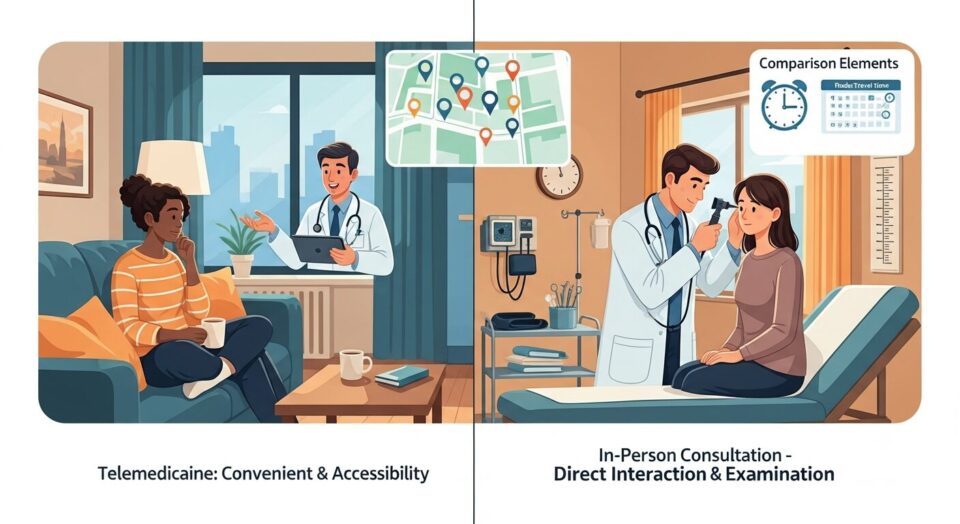
Despite telehealth’s expanding capabilities, certain medical situations continue to require face-to-face evaluation and treatment. Understanding these limitations helps healthcare providers and patients make informed decisions about appropriate care modalities.
Emergency Services and Complex Procedures
Medical emergencies requiring immediate intervention, such as heart attacks, strokes, severe injuries, and acute abdominal pain, necessitate in-person emergency care. These conditions require hands-on assessment, diagnostic imaging, and potential surgical intervention that cannot be provided remotely. Telehealth platforms can provide valuable triage support for emergency situations but cannot replace emergency medical services.
Complex diagnostic procedures including endoscopies, biopsies, and surgical interventions require specialized equipment and physical presence. While telehealth can support pre-procedure consultations and post-operative follow-up care, the procedures themselves must occur in clinical settings with appropriate medical infrastructure.
Conditions Requiring Physical Tests and Examinations
Certain medical conditions require hands-on physical examination that cannot be replicated through virtual consultations. These include detailed neurological examinations, joint and muscle assessments, and conditions requiring palpation or manipulation. Blood draws, imaging studies, and specialized diagnostic tests also necessitate in-person visits to medical facilities.
Pediatric care often requires physical examination components that prove challenging through telehealth platforms. While virtual consultations work well for many childhood conditions and telehealth combined with traditional care often provides optimal pediatric healthcare delivery, developmental assessments, growth monitoring, and certain acute conditions benefit from in-person evaluation. With proper training and practice, the vast majority of exams and assessments are possible through video with or without peripheral devices.
Research Confirms Lower Missed Visits and Better Medication Adherence
Research analysis across multiple studies demonstrates telehealth’s superior performance in maintaining patient engagement and treatment compliance. Studies comparing telehealth to in-person care consistently show reduced missed appointment rates and improved medication adherence across various medical conditions and patient populations, though some behavioral health patients may experience higher no-show rates via telehealth.
The convenience and accessibility of telehealth platforms eliminate many barriers that contribute to missed appointments in traditional healthcare settings. Patients no longer face transportation challenges, work schedule conflicts, or childcare obstacles that might prevent them from attending in-person visits. This improved attendance leads to more consistent care and better health outcomes.
Medication adherence rates improve significantly through telehealth platforms that provide regular check-ins and medication management support. Healthcare providers can monitor prescription compliance, address side effects promptly, and provide ongoing education about proper medication use. Digital pill reminders and medication tracking tools integrated with telehealth platforms further improve adherence rates.
The data supports telehealth as a transformative force in healthcare delivery, offering superior outcomes for many conditions while expanding access to quality medical care. As technology continues advancing and provider expertise with virtual care platforms grows, the scope of effectively treatable conditions through telehealth will likely continue expanding, revolutionizing how healthcare is delivered and received.
For healthcare providers seeking to understand the full scope of telehealth applications and implementation strategies, TelehealthWatch offers resources and analysis on remote care technologies.
Leave a Reply